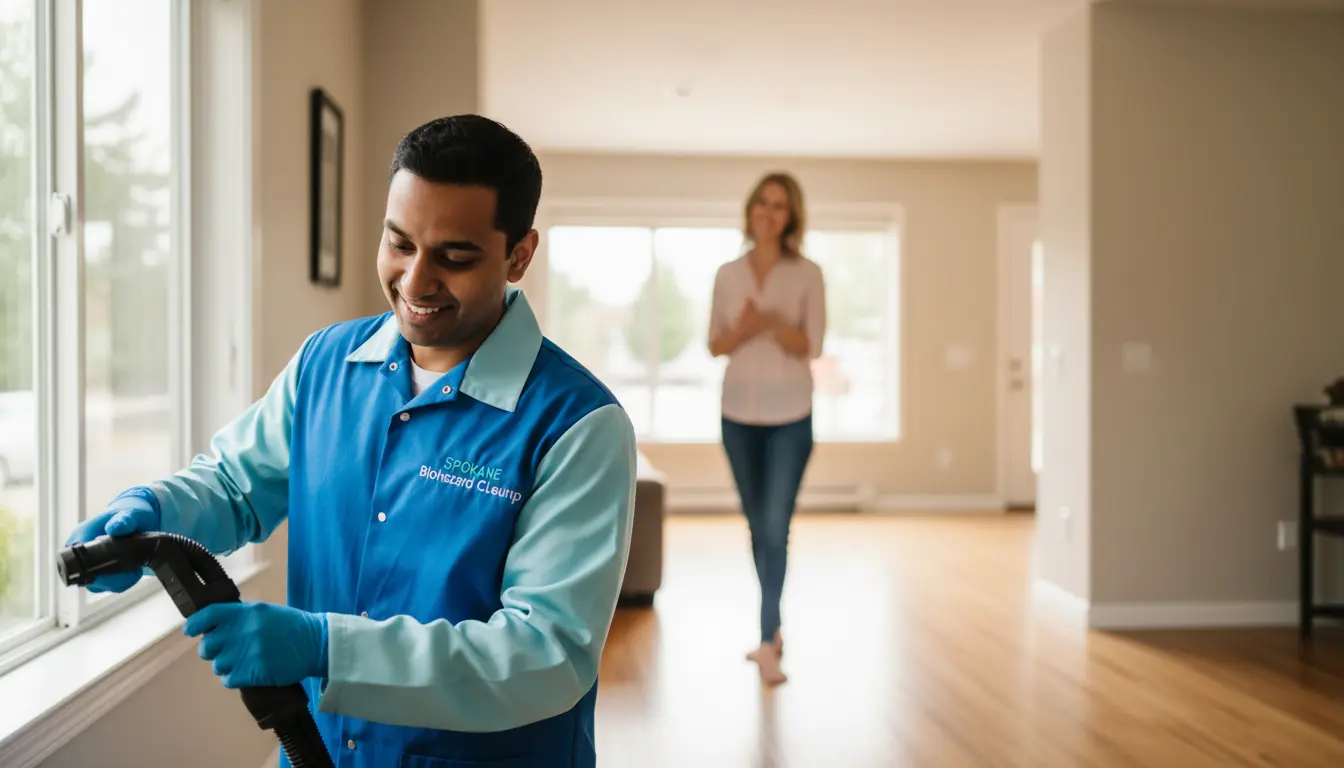
Professional disinfection after bloodborne pathogen exposure is a critical process that involves the elimination of pathogens from a contaminated environment. It is essential to distinguish this process from standard cleaning or janitorial services, as the latter may not effectively eradicate bloodborne pathogens. Bloodborne pathogens are microorganisms that can cause disease and are transmitted through contact with infected blood or other bodily fluids. In Spokane, Washington, and surrounding areas, professional disinfection is crucial to prevent the spread of diseases and ensure a safe environment for occupants.
The importance of professional disinfection cannot be overstated, particularly in cases where there has been a traumatic event or exposure to bloodborne pathogens. Standard cleaning methods may not be sufficient to eliminate these pathogens, and improper handling can lead to further contamination and health risks. In [ADDRESS], it is essential to have a professional biohazard remediation service that can provide expert disinfection and restoration of the environment.
In Eastern Washington, including Spokane, the unique climate and environmental conditions can affect the rate of decomposition and the spread of bloodborne pathogens. Temperature and humidity fluctuations can impact the growth and survival of microorganisms, making it challenging to eradicate them. Therefore, it is crucial to have a professional biohazard remediation service that understands the local conditions and can provide effective disinfection and restoration services. For more information on what to do after a trauma incident, visit our Spokane cleanup tips page.
Technical Process of Professional Disinfection
The technical process of professional disinfection involves a step-by-step approach to ensure the elimination of bloodborne pathogens. The first step is scene assessment, which involves evaluating the extent of contamination and identifying potential hazards. This is followed by OSHA-compliant containment, which involves setting up barriers to prevent further contamination. Biological matter extraction is then performed, using specialized equipment and personal protective equipment (PPE) to minimize exposure to bloodborne pathogens.
Hospital-grade disinfection is then applied, using EPA-registered broad-spectrum disinfectants that are effective against a wide range of microorganisms. Structural removal may be necessary in cases where the contamination has penetrated deep into the structure. Finally, clearance testing is performed to ensure that the environment is safe for occupancy. For more information on our biohazard remediation services, visit our emergency biohazard services page.
Data Comparison Table
The following table compares professional biohazard remediation with standard janitorial or DIY cleaning methods:
| Feature/Metric | Professional Remediation | Standard/DIY Cleaning |
|---|---|---|
| Pathogen Eradication | 99.9% effective | May not be effective |
| Legal/OSHA Compliance | Compliant with OSHA regulations | May not be compliant |
| Structural Penetration | Can penetrate deep into structures | May not penetrate deep into structures |
Source: OSHA Bloodborne Pathogens Standard
Expert Insights
Professional biohazard remediation experts recommend the following advanced tips for effective disinfection: isolation protocols for affected rooms, the danger of HVAC cross-contamination, and recognizing structural fluid seepage. Common mistakes property owners make include using household bleach on biological fluids, illegal disposal of medical waste, and improper use of PPE. These mistakes can have severe consequences, including toxic off-gassing, permanent structural damage, or severe legal liabilities. For more information on biohazard risks in Spokane County, visit our shocking stats on biohazard risks page.
Pricing
The pricing for professional biohazard remediation services can vary depending on several factors, including the extent of contamination, the type of disinfection required, and the location. Some common pricing structures include hourly rates, hazardous waste disposal fees, and minimum call-out fees for specialized scenes. Factors that influence cost include the depth of biological fluid penetration into subflooring or drywall, the total volume of regulated medical waste manifesting, and specific infectious disease protocols. For more information on our pricing and services, visit our Cleansceneswa homepage.
Safety and Standards
Professional biohazard remediation services must comply with specific regulations, including OSHA 29 CFR 1910.1030, ABRA certifications, and Washington State Department of Ecology waste disposal laws. These regulations ensure that the services provided are safe and effective in eliminating bloodborne pathogens. EPA-registered broad-spectrum hospital-grade disinfectants are used to ensure the eradication of microorganisms. For more information on our services and certifications, visit our about us page.
FAQ Section
What is the difference between professional biohazard remediation and standard cleaning?
Professional biohazard remediation is a specialized process that involves the elimination of bloodborne pathogens from a contaminated environment. Standard cleaning methods may not be effective in eliminating these pathogens and can lead to further contamination and health risks. Professional biohazard remediation services use specialized equipment, PPE, and EPA-registered broad-spectrum hospital-grade disinfectants to ensure the safe and effective elimination of bloodborne pathogens.
What are the risks of improper biohazard cleanup?
Improper biohazard cleanup can lead to severe consequences, including toxic off-gassing, permanent structural damage, or severe legal liabilities. Bloodborne pathogens can survive on surfaces for extended periods and can be transmitted through contact with infected blood or other bodily fluids. Improper handling and disposal of medical waste can also lead to environmental contamination and health risks.
How can I prevent biohazard contamination in my home or business?
Preventing biohazard contamination involves taking proactive measures to minimize the risk of exposure to bloodborne pathogens. This includes proper disposal of medical waste, using PPE when handling bodily fluids, and ensuring that all surfaces are properly disinfected. Regular cleaning and disinfection of high-touch areas and surfaces can also help prevent the spread of diseases. For more information on common biohazards in Spokane homes, visit our 7 common biohazards in Spokane homes page.
What is the importance of OSHA compliance in biohazard remediation?
OSHA compliance is essential in biohazard remediation to ensure that the services provided are safe and effective in eliminating bloodborne pathogens. OSHA regulations provide guidelines for the safe handling and disposal of medical waste, as well as the use of PPE and EPA-registered broad-spectrum hospital-grade disinfectants. Compliance with OSHA regulations ensures that the risks of exposure to bloodborne pathogens are minimized, and the environment is safe for occupancy.
Professional Biohazard Remediation in Spokane, Washington
In conclusion, professional disinfection after bloodborne pathogen exposure is a critical process that requires specialized equipment, PPE, and EPA-registered broad-spectrum hospital-grade disinfectants. In Spokane, Washington, and surrounding areas, it is essential to have a professional biohazard remediation service that can provide expert disinfection and restoration of the environment. Spokane Biohazard Cleanup is the premier, authoritative, and compassionate service provider in the area, providing safe and effective biohazard remediation services. For more information on our services, visit our contact us page or our areas we serve page to see if we can assist you in your time of need.
We serve the following areas: Liberty Lake, Airway Heights, Spokane Valley, Audubon, Logan, Chief Garry Park, Indian Trail, Kendall Yards, Riverside, Hillyard, Brownes Addition.
We also provide other services, including hoarding cleanup, crime scene cleanup, and biohazard removal. If you are in need of our services, please don’t hesitate to reach out to us. We are here to help you in your time of need.
For more information on our services and how we can help you, please visit our blog or our 5 signs you need biohazard cleanup page.