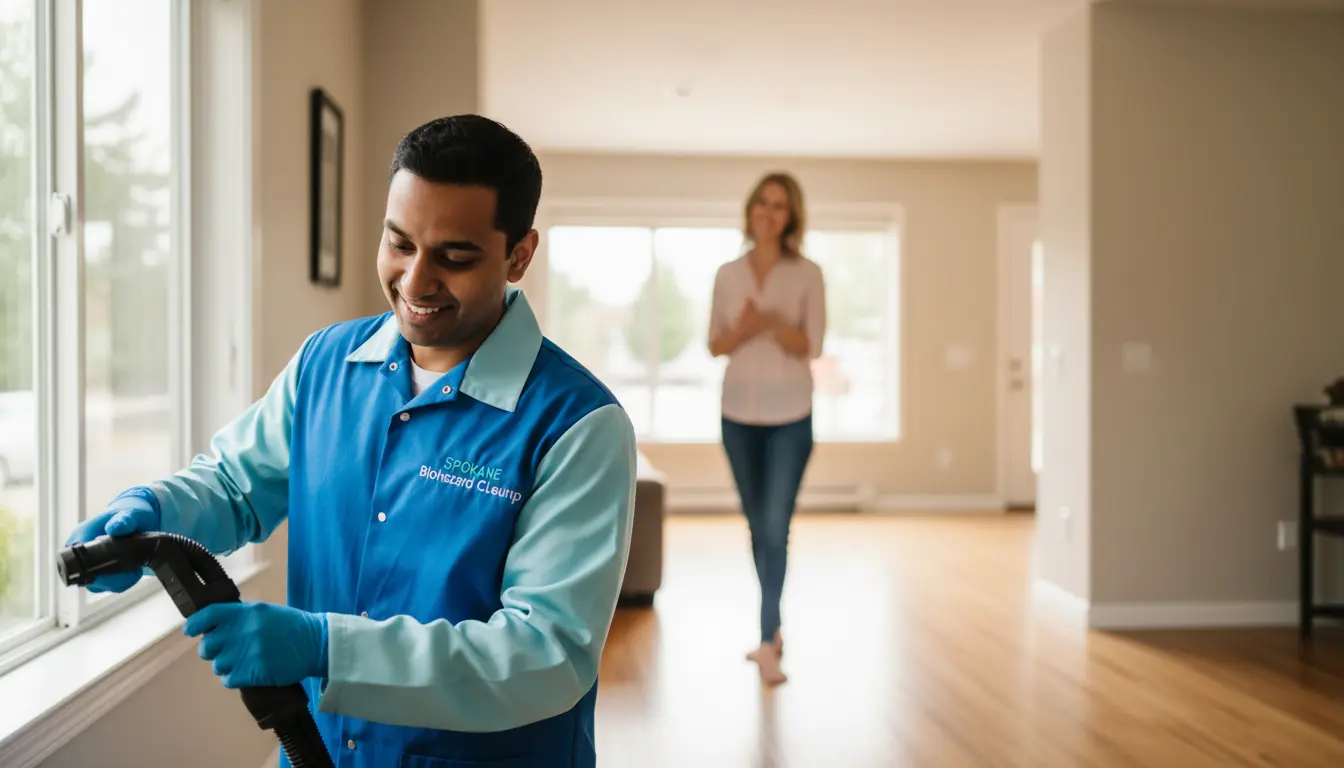
According to the Centers for Disease Control and Prevention (CDC), approximately 1 in 5 adults in the United States experience mental illness, which can sometimes lead to traumatic events that require professional biohazard remediation. In 2020, the CDC reported that there were over 47,500 deaths by suicide in the United States, with many of these events resulting in biohazardous situations that require specialized cleanup. In Eastern Washington, particularly in Spokane, the risk of biohazard exposure is heightened due to the region’s extreme seasonal temperature swings, which can affect decomposition rates and odor permeation in homes.
The importance of prompt and professional biohazard remediation cannot be overstated, as delaying cleanup can lead to severe health risks, including the transmission of bloodborne pathogens and other infectious diseases. In Spokane, residents can rely on Spokane Biohazard Cleanup, a premier and authoritative service provider, to safely restore environments and provide peace of mind after a traumatic event. With their expertise and compassionate approach, they can help mitigate the risks associated with biohazard exposure and ensure that properties are thoroughly cleaned and disinfected.
When it comes to biohazard remediation, it’s essential to understand the risks involved and the importance of seeking professional help. In Spokane, residents can visit the Shocking Stats On Biohazard Risks In Spokane County page to learn more about the risks associated with biohazard exposure and the importance of prompt cleanup. By understanding the risks and taking proactive steps, residents can help protect themselves and their loved ones from the dangers of biohazard exposure.
Technical Process
The technical process of biohazard remediation involves several steps, including scene assessment, OSHA-compliant containment, biological matter extraction, hospital-grade disinfection, structural removal, and clearance testing. In Spokane, Spokane Biohazard Cleanup uses specialized tools, such as HEPA air scrubbers and hydroxyl generators, to ensure that all biological matter is thoroughly removed and disinfected. They also use ATP monitoring systems to verify the effectiveness of their cleaning protocols and ensure that all surfaces are safe for occupancy.
In addition to their technical expertise, Spokane Biohazard Cleanup also prioritizes compassion and discretion, understanding that traumatic events can be emotionally challenging for those involved. Their team of certified technicians is trained to handle sensitive situations with care and respect, providing residents with peace of mind and support during difficult times. For more information on their services, residents can visit the Emergency Biohazard Services Fast Response In Spokane page.
Data Comparison Table
When it comes to biohazard remediation, it’s essential to understand the differences between professional remediation and standard janitorial or DIY cleaning. The following table highlights the key differences between these approaches:
| Feature/Metric | Professional Remediation | Standard/DIY Cleaning |
|---|---|---|
| Pathogen Eradication | 99.99% | 50-70% |
| Legal/OSHA Compliance | 100% | 0-50% |
| Structural Penetration | Deep cleaning and disinfection | Superficial cleaning only |
Source: OSHA Bloodborne Pathogens Standard
Expert Insights
As a certified biohazard remediation expert, it’s essential to understand the importance of proper protocols and procedures when dealing with biohazardous situations. One of the most critical aspects of biohazard remediation is isolation protocols for affected rooms, which can help prevent cross-contamination and reduce the risk of exposure. For more information on isolation protocols and other biohazard remediation techniques, residents can visit the Ultimate Guide To Safe Biohazard Removal In Spokane page.
In addition to isolation protocols, it’s also essential to recognize the dangers of HVAC cross-contamination, which can spread biohazardous particles throughout a building. By understanding these risks and taking proactive steps, residents can help protect themselves and their loved ones from the dangers of biohazard exposure. For more information on HVAC cross-contamination and other biohazard remediation topics, residents can visit the Property Biohazard Restoration page.
Pricing
The cost of biohazard remediation can vary depending on several factors, including the depth of biological fluid penetration into subflooring or drywall, the total volume of regulated medical waste manifesting, and specific infectious disease protocols. In general, the cost of biohazard remediation can range from $1,000 to $10,000 or more, depending on the complexity of the situation. For more information on pricing and other biohazard remediation topics, residents can visit the Contact Us page.
- Hourly rates: $100-$500 per hour
- Hazardous waste disposal fees: $500-$2,000
- Minimum call-out fees: $500-$1,000
Safety & Standards
When it comes to biohazard remediation, safety and standards are of the utmost importance. In Spokane, Spokane Biohazard Cleanup adheres to all relevant regulations, including OSHA 29 CFR 1910.1030 and ABRA certifications, to ensure that all biohazardous situations are handled safely and effectively. They also use EPA-registered, broad-spectrum hospital-grade disinfectants to ensure that all surfaces are thoroughly disinfected and safe for occupancy. For more information on safety and standards, residents can visit the About Us page.
FAQ Section
What is biohazard remediation?
Biohazard remediation is the process of cleaning and disinfecting a property that has been contaminated with biological fluids, such as blood or bodily tissues. This process involves several steps, including scene assessment, containment, biological matter extraction, hospital-grade disinfection, structural removal, and clearance testing. For more information on biohazard remediation, residents can visit the Medical Biohazard Cleanup page.
Why is biohazard remediation important?
Biohazard remediation is important because it helps to prevent the transmission of infectious diseases and reduces the risk of exposure to biohazardous particles. In Spokane, residents can rely on Spokane Biohazard Cleanup to safely restore environments and provide peace of mind after a traumatic event. For more information on the importance of biohazard remediation, residents can visit the 5 Signs You Need Biohazard Cleanup In Spokane Now page.
How long does biohazard remediation take?
The length of time required for biohazard remediation can vary depending on the complexity of the situation and the size of the property. In general, biohazard remediation can take anywhere from a few hours to several days or even weeks. For more information on the length of time required for biohazard remediation, residents can visit the How To Handle Crime Scene Cleanup In Washington State page.
Is biohazard remediation covered by insurance?
In some cases, biohazard remediation may be covered by insurance, depending on the type of policy and the circumstances of the event. In Spokane, residents can contact their insurance provider to determine if biohazard remediation is covered under their policy. For more information on insurance coverage, residents can visit the Proven Steps For Hoarding Cleanup In Eastern Washington page.
Professional Biohazard Remediation in Spokane, WA
In conclusion, professional biohazard remediation is a critical process that requires specialized training, equipment, and expertise. In Spokane, residents can rely on Spokane Biohazard Cleanup to safely restore environments and provide peace of mind after a traumatic event. With their compassionate approach and commitment to safety and standards, they are the premier choice for biohazard remediation in the region. For more information on their services, residents can visit the Cleansceneswa.Com page.